
 ENG
ENG  English
 русский
 Français
 Español
 عربى
عربى Türk
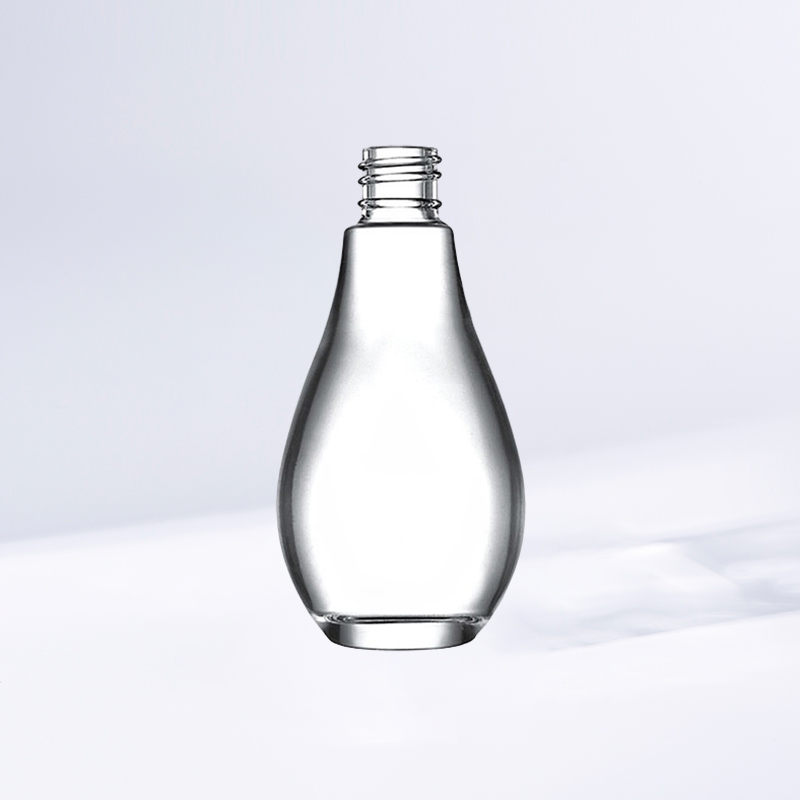
TürkJ2514 Transparent Inverted Pear-Shaped Lotion Bottle 46ml. Unique inverted pear silhouette in clear glass. Compact size: 53x23.8x85mm, 84g. Allows easy monitoring of the liquid level. Perfect for loti...
See DetailsThe Essential Lotion Glass Bottle Buying Guide: Sizes, Closures, and Supplier Tips
2026-08-14
Content
- 1 Why Glass Remains the Right Choice for Lotion Packaging
- 2 Match Capacity to How Consumers Actually Use the Product
- 3 Screw Cap or Pump: the Closure Defines the Experience
- 4 Bottle Shapes and What They Communicate on the Shelf
- 5 From Sample to Production: Working With a Supplier
- 6 Frequently Asked Questions
A skincare founder once showed us a beautiful bottle that had already delayed their launch by three weeks. The design was right, but the pump did not seat on the neck finish, so every filled unit leaked in line. That one mismatch forced a new closure order, a capping re-tool, and an extra full production round. The lesson for anyone buying a lotion glass bottle is simple: judge the packaging as a system, not as a single pretty object. Four specifications decide most of the result — capacity, neck finish, glass weight, and closure compatibility. Start there, and the rest of the selection becomes straightforward.
Why Glass Remains the Right Choice for Lotion Packaging
For most lotion brands, glass is the safest packaging option available — for chemical, not fashionable, reasons. Glass is inert, so it does not react with emulsifiers, preservatives, oils, or fragrance compounds the way some plastics can. It will not leach monomers or additives into the formula, and it does not absorb or release odours. Clear glass also lets the consumer see the texture, colour, and consistency of the lotion before purchase, which shortens the decision at the shelf.
Light-sensitive actives such as retinol and vitamin C benefit from amber or emerald glass, which filters UV in a way that clear containers cannot. And because glass can be recycled indefinitely without quality loss, a glass pack supports the sustainability claims that more retailers now request. None of this means every glass bottle is equal: wall thickness, annealing quality, and weight consistency vary between factories, and those differences show up later as breakage, capping problems, or transit damage.
Match Capacity to How Consumers Actually Use the Product
Capacity should follow usage frequency, not formula volume. A concentrated facial serum is dosed in drops, so a 30–50 ml bottle is generous; a body lotion is applied in palmfuls, so anything below 90 ml feels inadequate. Choose the size that matches how fast the consumer finishes the product, because that pace decides shelf life, packaging cost, and repurchase timing.
| Capacity | Typical format | Closure suggestion | Why it works |
|---|---|---|---|
| 30–50 ml | Facial serums, emulsions, spot treatments | Small pump or screw cap | Low per-use dose; narrow neck limits air exchange |
| 90–100 ml | Hand lotions, daily body lotions | Screw cap or standard lotion pump | Practical shelf life; easy to handle in one hand |
| 100–200 ml | Body lotions, massage and hair care | Pump with dip tube | High-frequency use; large volume keeps refills practical |
Note that capacity numbers have two meanings. Brim capacity is the total liquid the bottle holds when filled to the top; fill capacity is what you can safely bottle with headspace for expansion and preservative systems. The dip tube of a pump must reach below the fill level to the bottom of the bottle, so tube length and interior height must match exactly. For a straightforward mid-size format, a 100ml screw lotion bottle covers most daily-use hand and body lotions without oversizing the pack.
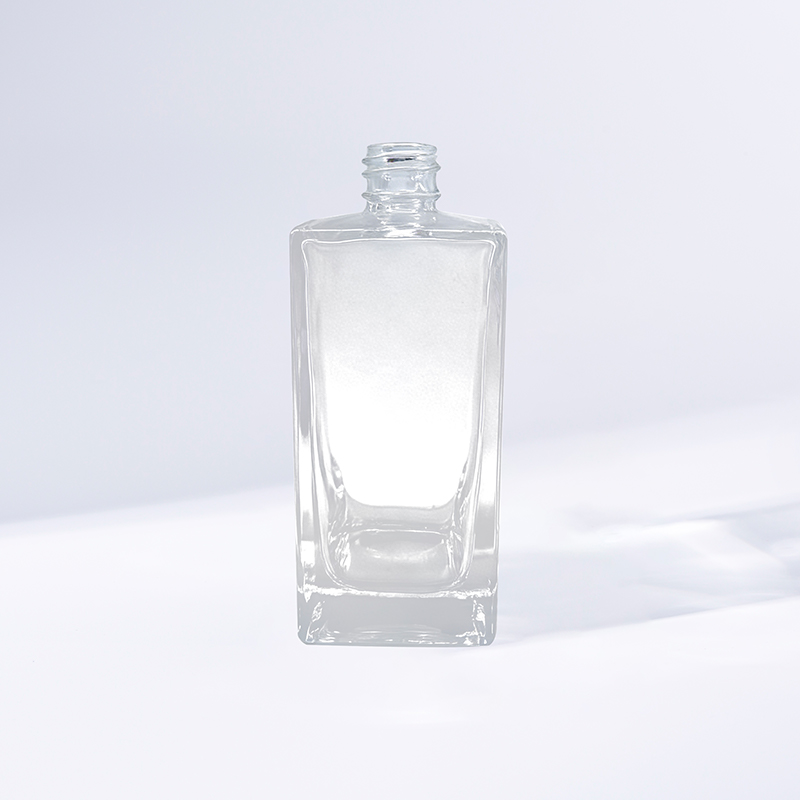 Custom J2773 Screw Lotion Bottle 100ml Manufacturer, OEM/ODM FactoryTaixing Jili Glass Products Co., Ltd. is a China Custom J2773 Screw Lotion Bottle 100ml manufacturers and OEM/ODM factory,J2773 Screw Lot...View Product →
Screw Cap or Pump: the Closure Defines the Experience
If the bottle is the brand identity, the closure is the interface where problems actually happen. Screw caps keep thick lotions sealed with a simple, re-sealable motion and have fewer moving parts to fail in transit. Pumps give hygienic, one-hand dispensing and reduce oxygen ingress between uses — but they demand precise tolerances on the neck finish. A thread that is off by fractions of a millimetre will leak, or the pump will pop off during capping.
Before selecting a closure, write down the exact neck finish code of the bottle, expressed in millimetres (for example, 18/410, 20/410, or 24/410). This code defines the thread profile and mouth diameter, and it must match the cap or pump exactly. Ask the supplier to confirm the finish, then verify it on a physical sample.
- Neck finish code and thread dimensions against the cap or pump drawing
- Dip tube length relative to the interior height of the bottle
- Sealing gasket or inner stopper compatibility with your formula
- Torque required to open the cap — firm, but comfortable for most consumers
Bottle Shapes and What They Communicate on the Shelf
Shape is the first thing a shopper reads, even before the label. Straight cylindrical bodies read as practical and unisex — a natural fit for salon lines and body-care ranges. Curved or inverted-pear profiles feel softer and more premium, the kind of silhouette consumers associate with serums and gift sets. Long, slim cylinders look modern and save shelf depth, especially in narrow retail displays.
Your formula texture should influence the silhouette as well. Thick creams are easier to dispense from a wide-mouth bottle; thin lotions work well through pumps on taller narrow bottles. The choice is also a project-management decision: standard shapes are available from existing moulds, so development time and tooling cost stay low. To scan the options, start from our lotion bottle collection and filter by capacity and silhouette.
The inverted-pear shape deserves special attention for facial care. Its narrow shoulder reduces the surface area of open product when the cap is off, and it sits comfortably in the hand during daily use. For concentrated serums, a transparent inverted pear-shaped 46ml bottle is a compact format that keeps the dose honest and looks deliberate on a bathroom shelf.
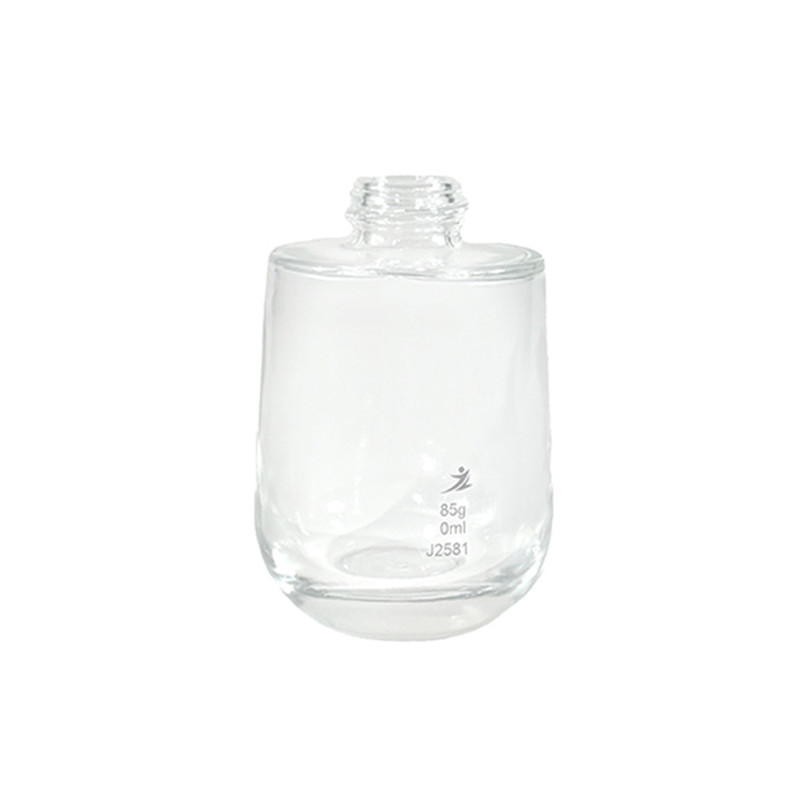 Custom J2514 Transparent Inverted Pear-Shaped Lotion Bottle 46ml with Simple ModTaixing Jili Glass Products Co., Ltd. is a China Custom J2514 Transparent Inverted Pear-Shaped Lotion Bottle 46ml with Simple Modern Desi...View Product →
Thick body butter or cream
Choose a wide opening or jar-like neck; narrow pumps clog quickly with high-viscosity formulas.
Light facial emulsion
A 30–50 ml bottle with a small pump or narrow cap keeps air out and doses precisely.
Daily hand lotion
A 90–100 ml bottle with a pump or screw cap balances portability, shelf life, and cost.
Premium gift line
Heavier glass, tinted colour, and a decorated cap justify a higher retail price.
From Sample to Production: Working With a Supplier
The cheapest bottle is not the least expensive once rejects and delays are counted. The most important step is a physical sample filled with your actual formula and tested through the real cap or pump. Weigh the empty units to check consistency across a batch — weight variation beyond a few percent usually points to unstable furnace control, which appears later as cracked necks or thin walls that break in the capping line.
Ask the supplier about annealing quality and shock resistance. A properly annealed bottle goes through gradual cooling to relieve internal stress, so it can handle hot filling, cold-chain transport, and the mechanical torque of capping. The production methods behind these properties matter more than the photo in the catalogue, and our manufacturing and quality control capabilities are structured around keeping batch-to-batch variation small.
For larger volumes, bottle weight is a real cost item because freight is charged by weight, not by volume. A lightweight 108ml screw-cap bottle keeps the premium feel of glass while cutting shipping cost, and consumers notice the easier handling too.
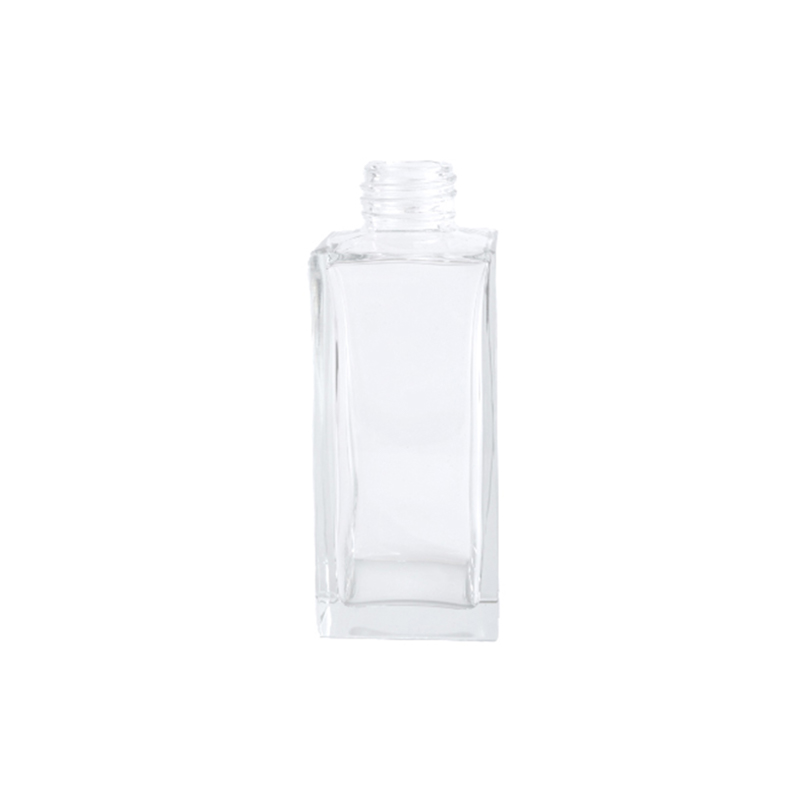 Custom Transparent Long Cylindrical Screw Cap Lotion Bottle 108ml Lightweight MaTaixing Jili Glass Products Co., Ltd. is a China Custom Transparent Long Cylindrical Screw Cap Lotion Bottle 108ml Lightweight manufactur...View Product →
Once a sample is approved, the production process can be planned. A typical project runs through four steps:
- Share your target capacity, formula type, preferred closure, and decoration ideas.
- Review samples: fill them with the real formula, run a leak and pump test, and simulate a short transit test.
- Approve the decoration (spray colour, silk-screen printing, frosting, or hot stamping) on a finished sample.
- Place the production order and agree on delivery dates and batch inspection points.
Good communication is the cheapest insurance in packaging sourcing. Send your specification, and the factory can recommend a matching bottle from existing moulds instead of starting from zero. To start a project, contact our team with your target capacity and closure — a short check at the drawing stage prevents most delays.
Frequently Asked Questions
What size lotion glass bottle should I choose?
Base the size on how fast consumers use the product. Serums and spot treatments fit a 30–50 ml bottle, daily hand and body lotions work best at 90–100 ml, and generous body or hair-care formats usually need 100–200 ml with a pump.
Screw cap or pump for a lotion?
Thick formulas are easier to manage with a screw cap, while watery lotions benefit from a pump for clean, one-hand dosing. Pumps reduce air ingress after opening, which helps preserve oxygen-sensitive actives. In both cases, the neck finish must match the closure exactly.
Can the bottles be customised with colours and decoration?
Yes. Standard options include spray coating in custom colours, silk-screen printing, frosting or etching, and hot stamping. Send your colour reference and artwork, and the factory will produce a decorated sample before the full run. Custom neck finishes and shapes are possible through OEM/ODM projects.
How do I verify bottle quality before mass production?
Weigh units from several positions in the production row to check weight consistency, measure wall thickness with callipers, fill the bottle with your real formula, and test the cap or pump for leaks. Confirm the annealing quality and shock-resistance data with the supplier, and request photos or records from batch inspection.
Related products
-
-
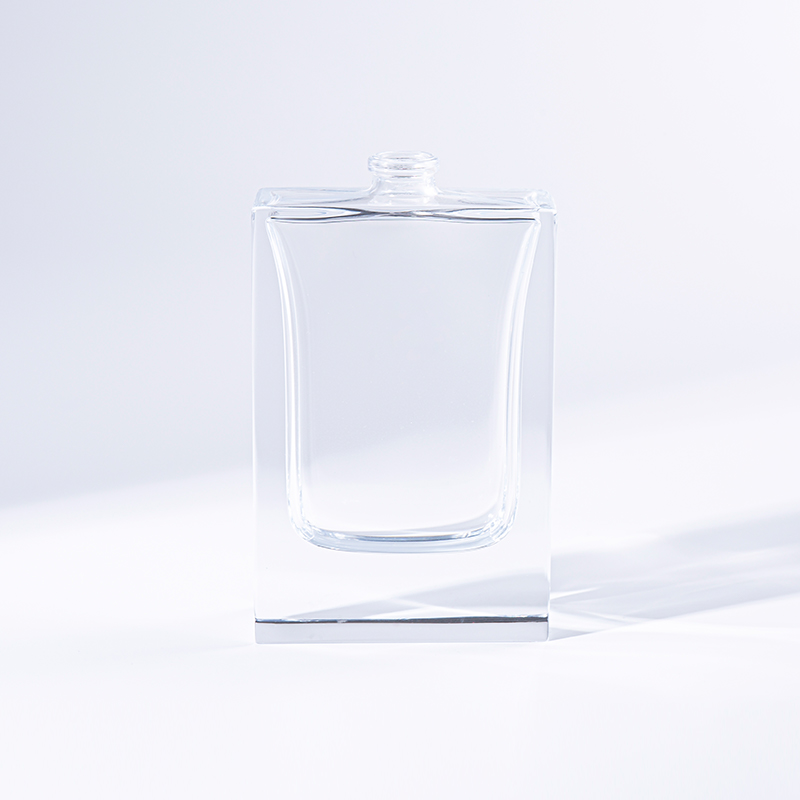
Z-442 Hand Polished Crimp Perfume Bottle 50ml. Hand-polished clear glass with a smooth finish. Aluminum crimp cap and precision spray nozzle. 50ml compact size. Ideal for travel, personal use, and gif...
See Details -
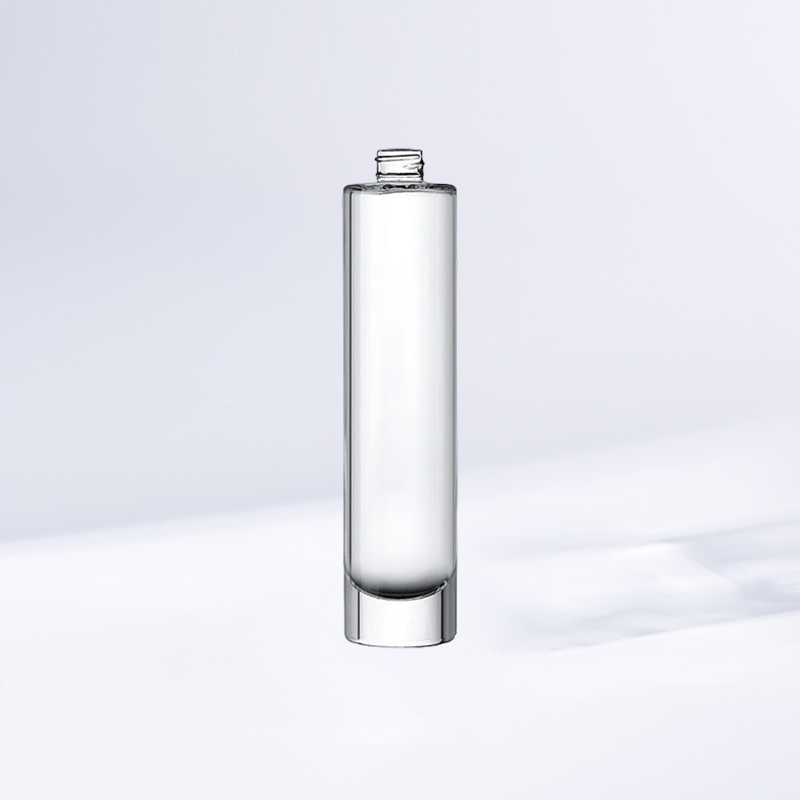
Transparent Long Cylindrical Screw Cap Lotion Bottle 108ml. Clear glass long cylinder with a wide base and a metal screw cap. Dimensions: 41.5x41.5x149.8mm, 190g. Stable and portable. Ideal for lotion...
See Details -
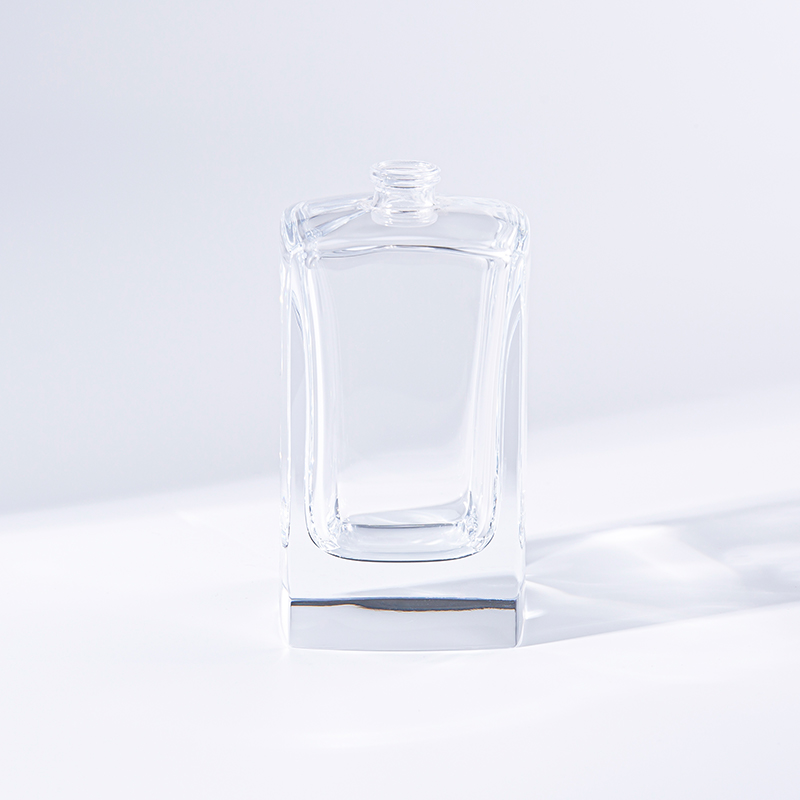
J3364 Hand Polished Crimp Perfume Bottle 100ml. Hand-polished clear glass for a smooth, glossy finish. Aluminum crimp cap with precision spray nozzle. 100ml capacity. Transparent for level monitoring....
See Details
Contact Info.
-
Tel.
+86 153 7158 1688 (Simon)
+86 181 3693 6668 (Mary)
+86 139 5117 2783 (Junwei Hua) -
Email
zl@jl-bl.cn (Simon)
mary@jl-bl.cn (Mary)
jwhua@jl-bl.cn (Junwei Hua) -
Address
Hongqiao Town, Taixing City, Taizhou City, Jiangsu Province, China
- Media
Leave Us for Quote
Copyright © Taixing Jili Glass Products Co., Ltd. All Rights Reserved. Custom Cosmetic Glass Packaging, Luxury Perfume Glass Bottle Manufacturer
