
 ENG
ENG  English
 русский
 Français
 Español
 عربى
عربى Türk
TürkJ2437 Square Aroma Diffuser Bottle 120ml. Large capacity clear glass square bottle (70x70mm base) with stable weight (293g). Designed for long-lasting home fragrance with reed sticks. Sealed neck mini...
See DetailsChoosing Aroma Glass Bottles: Capacity, Neck Finish and Supplier Checklist
2026-09-30
Content
- 1 What Defines an Aroma Glass Bottle in Household Fragrance?
- 2 Why an Aroma Glass Bottle Preserves Fragrance Better Than Polymers
- 3 Aroma Glass Bottle Capacity: Matching 30ml to 120ml to Real Use
- 4 Screw Neck vs. Crimp Cap: Which Closure Suits Refillable Fragrance
- 5 Supplier Checklist for Refillable Glass Bottle Orders
- 6 Frequently Asked Packaging Questions
Fragrance brands often contact Taixing Jili Glass Products Co., Ltd. with a specific problem: they know a reed diffuser or aromatherapy oil needs an aroma glass bottle, but they are not sure which capacity, neck finish, and glass treatment will protect the fragrance over weeks of open use. The choice changes how the scent is perceived, how often customers refill, and whether the packaging leaks during shipping. This article walks through the decisions that matter before a bulk order: glass composition, sizing, closure systems, and supplier verification.
What Defines an Aroma Glass Bottle in Household Fragrance?
An aroma glass bottle is a soda-lime glass container designed to hold fragrance oils, reed diffuser liquids, or essential oil blends while allowing steady evaporation through a wick, reed, or spray pump.
It is similar to perfume packaging in raw material, but different in behavior. Perfume bottles usually use a crimp cap and atomizer that the consumer never opens. Aroma bottles run in the opposite direction: consumers pour oil, insert reeds, replace the collar, or attach a roll-on top. That is why the neck finish and mouth size matter as much as the glass wall. A typical reed diffuser opening is sized to hold a plastic or rubber insert, commonly 18mm to 20mm in diameter, with 3 to 9 reeds depending on the bottle width.
From the factory side, an aroma glass bottle must be checked for thread consistency, inner diameter tolerance, and annealing stress. These three factors determine whether the cap matches, whether the collar fits without leaking, and whether the bottle survives temperature changes during shipping.
Definition: Aroma Glass Bottle. A rigid soda-lime glass container for reed diffusers, aromatherapy oils, and household fragrance liquids, with a neck geometry that accepts reeds, droppers, roll-ons, or spray pumps while keeping evaporation limited to the intended opening.
Why an Aroma Glass Bottle Preserves Fragrance Better Than Polymers
Glass is the only common packaging material that will not absorb or react with fragrance molecules, which is why it remains the default for premium aromatherapy and reed diffusers.
Fragrance oils contain terpenes, aldehydes, and esters. Some of those molecules migrate into the structure of polyethylene or polypropylene containers over time, a process measured in permeation tests such as ASTM D2684. The practical effect is slow loss of top notes and a plastic after-scent in the liquid. Metal containers introduce another risk: certain essential oil components, especially citrus oils, can accelerate corrosion or catalytic oxidation during long contact. Ceramic and earthenware work, but their porous surface absorbs oil and makes it harder to switch between fragrances without a dedicated liner.
Soda-lime glass avoids all three problems. Its amorphous network of silica, soda ash, and limestone is nearly inert, and its low permeability to oxygen and water vapor keeps the oil composition stable for months. That is why an aroma glass bottle outlasts polymer packaging when the product is a reed diffuser. A finished bottle must also be annealed slowly so internal stress stays low; otherwise, glass can crack when hot fragrance oil hits a cool bottle during filling. At Jili Glass, we inspect annealing stress on sample bottles from each furnace run before the batch moves to the cap assembly line.
For a 50ml aromatherapy bottle, the fill liquid can stay in continuous contact with soda-lime glass for 8 to 12 weeks of reed diffusion without measurable odor transfer from the vessel itself. Glass permeability to oxygen and nitrogen is effectively zero on packaging-industry timescales.
Soda-lime glass Plastic
Aroma Glass Bottle Capacity: Matching 30ml to 120ml to Real Use
Capacity determines reed count, evaporation surface, and refill interval; a 30ml bottle suits a car or travel bag, while a 120ml bottle is built for a living room shelf.
Volume is the first filter because it fixes the product size a customer places in a room. A 20ml sample fits in promotional kits and hotel vanity trays. A 50ml bottle is the usual entry point for a bedroom diffuser range; it takes 3 to 5 reeds and gives a visible presence on a shelf without dominating the space. A 100ml rectangular bottle works as a standard retail unit for living rooms, and a 120ml format with a wider mouth can hold 7 to 9 reeds for a large area. When comparing a 120ml square diffuser bottle, weight matters too: it typically reaches roughly 293g in our catalog, which tells you the glass mass and perceived quality before filling. Heavier glass also reduces the chance of tipping when a customer pulls reeds out.
| Capacity | Typical setting | Reed count | Refill cycle |
| 20-30ml | Travel, trial set, small bathroom | 1-3 | 2-4 weeks |
| 40-50ml | Bedroom, office desktop, car | 3-5 | 4-6 weeks |
| 100-105ml | Living room, retail standard SKU | 5-7 | 6-10 weeks |
| 120ml and above | Large living area, hotel lobby | 7-9 | 8-12 weeks |
30mlSample and travel standard
50mlBedroom bestseller for reed diffusers
100-120mlLiving room flagship format
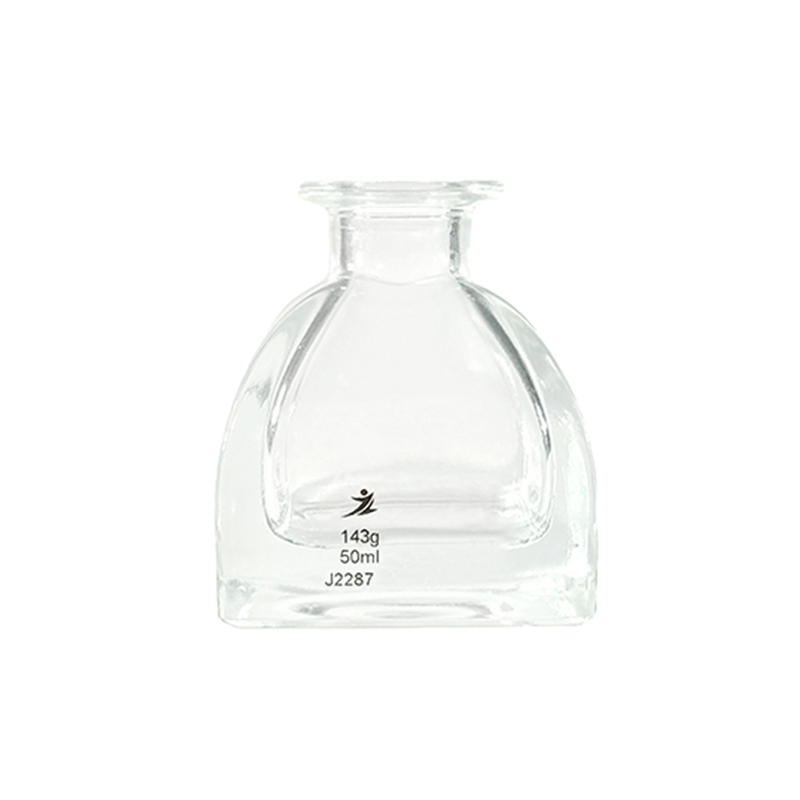 J2287 Square Aroma Diffuser Bottle 50ml Semi-Transparent GlassThis 50ml square glass bottle suits entry-level bedroom diffuser ranges, holding 3-5 reeds. Its semi-transparent finish displays liquid color clearly while its 143g weight offers a stable, quality feel on shelves.View Product →
 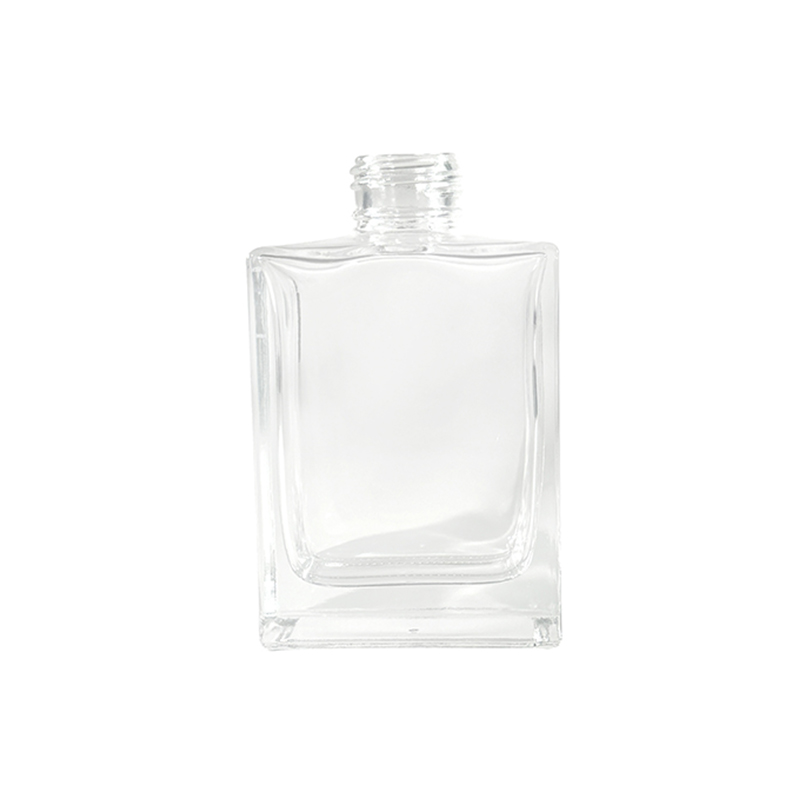 J2456 Rectangular Aroma Diffuser Bottle 105ml with Metal LidA space-saving rectangular 105ml bottle ideal for home or office diffusers. The metal lid ensures a secure seal, and the clear glass lets customers see the liquid level, fitting standard retail for living rooms.View Product →
Screw Neck vs. Crimp Cap: Which Closure Suits Refillable Fragrance
For a reed diffuser, a screw neck with a reed collar insert is the reliable standard; for a spray aromatherapy product, a crimp cap and pump give a better seal but make refilling difficult.
The closure defines how a consumer interacts with the bottle. Match it to the fill format before you approve a drawing.
Screw-top bottles for oil formats
- Open, refill, and reuse without tools
- Accepts droppers, roll-on balls, and reed collars
- Best for reed diffusers, roll-ons, travel formats
- Verify thread pitch and cap torque across production batches
Crimp-cap bottles for spray formats
- Airtight seal with a standard perfume pump
- Consistent atomizer experience for alcohol-based liquids
- Not reusable after the metal top is opened
- Choose only when refilling is not a marketing feature
Reed collar insert. A plastic or rubber component that fits into the bottle mouth, holds 3 to 9 reeds, and controls the open evaporation area. The inner diameter of the collar must match the bottle opening; sample testing is mandatory before mass filling.
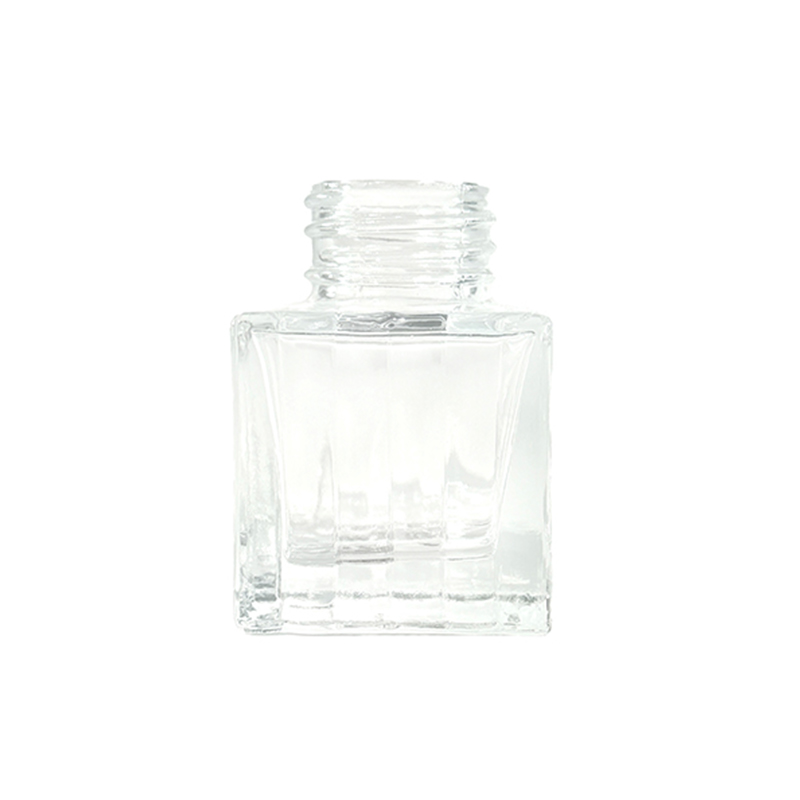 J2303 Screw-Top Aroma Glass Bottle 46ml PortableThis compact 46ml screw-top bottle is designed for essential oils and travel use. Its secure closure aligns with the refillable format, while dimensions and 105g weight make it easy to carry in bags.View Product →
Supplier Checklist for Refillable Glass Bottle Orders
A reliable glass supplier must verify three things before any refillable glass bottle order: glass treatment consistency, neck finish tolerance, and the ability to source matching caps and inserts.
The cheapest price per gram of glass is not the true cost if the cap fails or the bottle arrives with a chipped finish. Use a checklist with measurable checks.
- Check annealing and surface finish. Fire-polished and hand-polished bottles should have a clear thread and no sharp edges. Inspect 10 percent of each carton under direct light.
- Check thread and cap compatibility. Screw the actual cap onto the glass; test 5 to 10 caps from one batch and measure whether the torque range stays consistent.
- Check weight and wall distribution. A 100ml bottle should remain within a stated weight window; uneven walls weaken the glass and misalign the neck.
- Check component sourcing. Most refillable glass bottle orders need reed collars, droppers, or pumps; confirm the supplier can bundle them and coordinate tolerances.
- Check MOQ and lead time. A bulk run of 100,000 pieces is different from a 5,000-piece sample; ask for separate sampling and mass-production schedules.
Taixing Jili Glass Products Co., Ltd. runs a glass furnace with daily output above 60 tons, carries more than 5,000 bottle shapes, and counts 12 percent of its 230 employees as mid-level and senior technical staff. These numbers directly affect how fast a sampled shape can be repeated at mass scale.
After validating those five points, request a pre-production sample with your actual cap and liquid. That catches interaction problems before the glass leaves the factory. You can review the specific inspection flow in our manufacturing advantages section.
Frequently Asked Packaging Questions
These four answers cover the closure, color, starting volume, and customization decisions that determine most sampling approvals.
Which neck finish should I choose for an aroma glass bottle with reeds?
Choose a screw neck with a reed collar insert. It keeps the reed bundle stable, allows the user to refill the bottle, and accepts standard 18mm to 20mm inserts. Crimp necks should be reserved for sealed spray formats.
Does amber or cobalt blue glass change how a reed diffuser smells?
Tinted colors do not change the olfactory profile. Amber glass protects fragrance oils from visible light, while dark cobalt blue reduces UV transmission and looks modern on a shelf. What changes the scent is cork or low-quality plastic, not the colorant in glass.
What is the best volume for a first aroma glass bottle order?
A 50ml bottle is the safest entry point for reed diffusers: it fits a typical bathroom or bedroom, accepts 3 to 5 reeds, and is cheap enough to sample widely. If the retail price point needs a premium presence, start with a 100ml capacity.
Can my brand custom-mold its own aroma glass bottle?
Yes. A custom mold requires a confirmed 3D drawing, mold material lead time, and a trial run in the furnace. In an OEM/ODM arrangement, the supplier handles mold construction, sampling, annealing, and surface decoration, then moves to mass filling once the cap matches the neck tolerance.
Related products
-
-
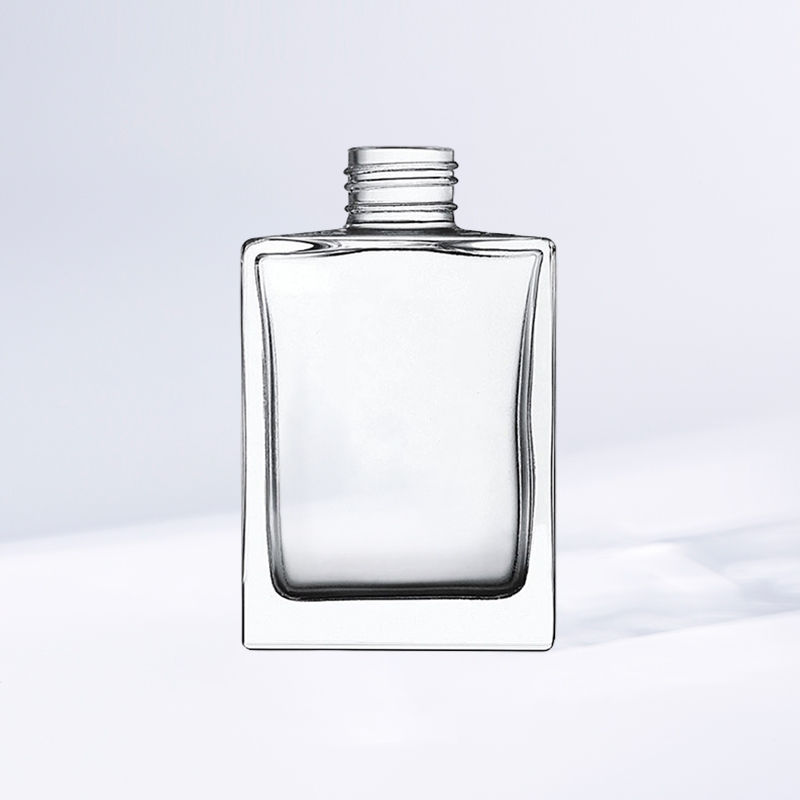
J2456 Premium Transparent Aroma Diffuser Bottle 105ml. Rectangular clear glass with a metal lid for a secure seal. Dimensions: 61.3x38.2x99mm, 198g. Space-saving design perfect for home, office, or as...
See Details -
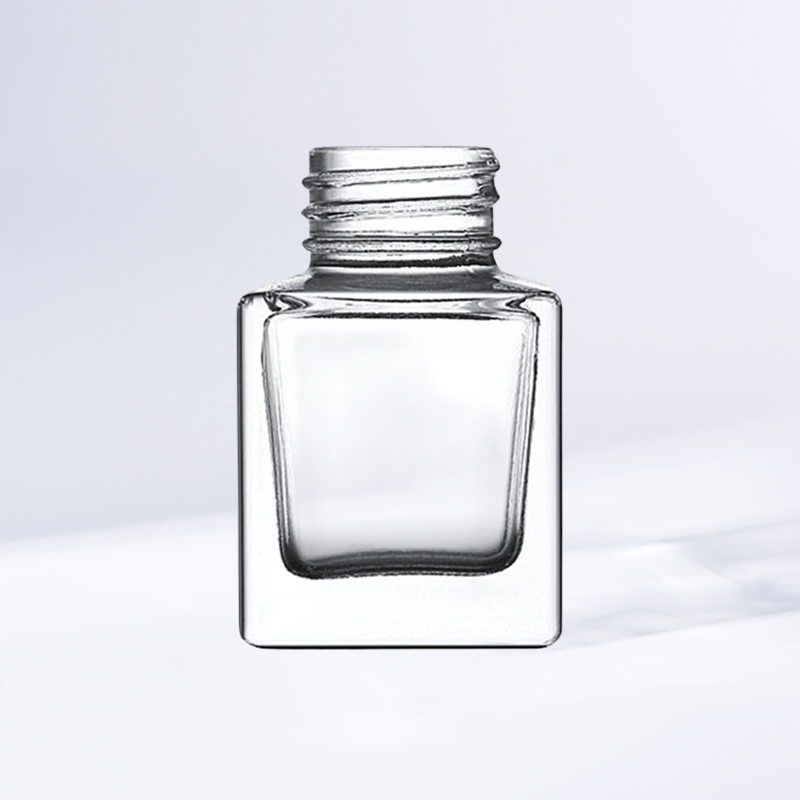
J2303 Screw-Top Aroma Glass Bottle 46ml. Compact transparent glass bottle with screw cap for secure closure. Dimensions: 42x42x64.6mm, 105g. Ideal for essential oils, fragrance oils, and portable use....
See Details -
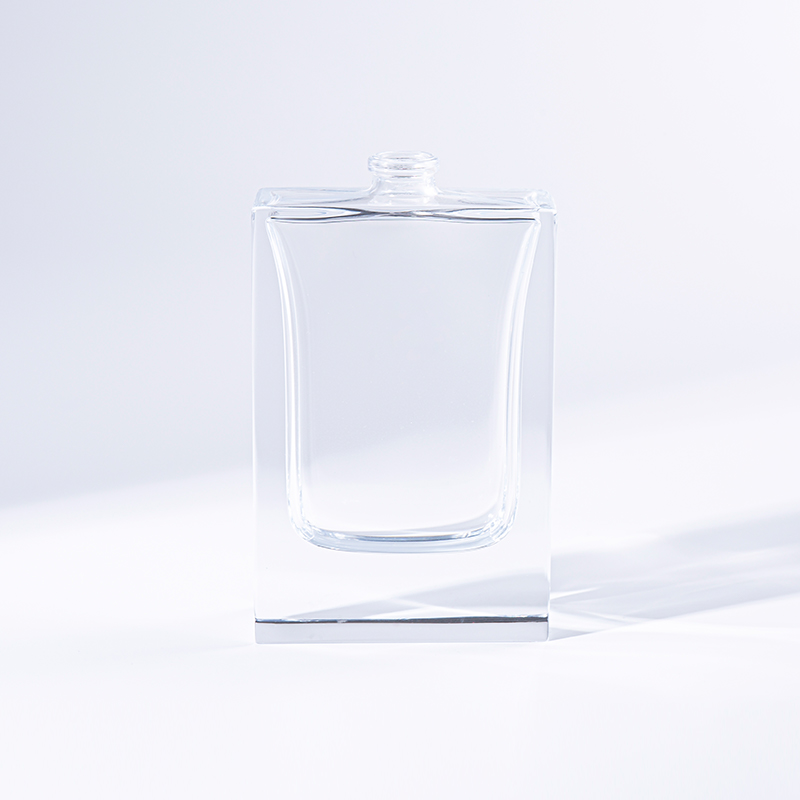
Z-442 Hand Polished Crimp Perfume Bottle 50ml. Hand-polished clear glass with a smooth finish. Aluminum crimp cap and precision spray nozzle. 50ml compact size. Ideal for travel, personal use, and gif...
See Details
Contact Info.
-
Tel.
+86 153 7158 1688 (Simon)
+86 181 3693 6668 (Mary)
+86 139 5117 2783 (Junwei Hua) -
Email
zl@jl-bl.cn (Simon)
mary@jl-bl.cn (Mary)
jwhua@jl-bl.cn (Junwei Hua) -
Address
Hongqiao Town, Taixing City, Taizhou City, Jiangsu Province, China
- Media
Leave Us for Quote
Copyright © Taixing Jili Glass Products Co., Ltd. All Rights Reserved. Custom Cosmetic Glass Packaging, Luxury Perfume Glass Bottle Manufacturer
