
 ENG
ENG  English
 русский
 Français
 Español
 عربى
عربى Türk
Türk50ml Transparent Cream Jar, Premium Cosmetic Packaging. Clear glass wide-mouth jar for creams and balms. 50ml capacity allows easy access and visibility of contents. Ideal for face creams, eye creams,...
See DetailsCream Bottle Packaging: How to Choose Bottles, Jars, Sizes and Suppliers
2026-09-09
Content
- 1 Glass versus plastic in cream bottle packaging: the material decision
- 2 Jar or pump bottle: matching the format to your formula
- 3 Standard capacities and neck finishes in cream bottle packaging
- 4 Finishing and decoration: where the visual budget goes
- 5 How to qualify a cream bottle packaging supplier
- 6 Frequently asked questions about cream packaging
When a skincare brand sends a request for quotation for its first 50 ml face cream, the packaging engineer does not pick the prettiest bottle in the catalogue. She picks the container whose glass composition, neck finish, and seal surface match the formula, the filling line, and a cap that has already passed stability testing. That is what cream bottle packaging means in practice: a coordinated system of bottle or jar, closure, liner, and decoration chosen around the behavior of a semi-solid emulsion.
The stakes are technical and commercial: a 50 ml frosted glass jar signals a treatment product, while the same formula in a thin-walled plastic jar reads as a promotional item. Buyers judge cream packaging on material performance, dimensional precision, closure compatibility, and unit economics.
Cream bottle packaging is the engineering of glass or plastic containers, together with their closures and surface finishes, to store, protect, and dispense semi-solid cosmetic formulations such as face creams, body butters, eye creams, and heavy lotions.
Glass versus plastic in cream bottle packaging: the material decision
Glass is the correct base material when your cream contains oxygen-sensitive actives or when the shelf position demands weight and clarity; plastic is the correct base material when unit weight and shatter resistance outrank everything else.
Antioxidants such as vitamin C, retinol, and ferulic acid degrade faster in contact with atmospheric oxygen, so the low oxygen transmission of glass gives formulators a measurable stability advantage. Plastic is not automatically inferior; it simply forces the formulation to carry extra antioxidant load.
| Cream packaging factor | Glass container | Plastic container |
| Oxygen transmission | Very low | Moderate to high |
| Interaction with actives | Minimal for most formulas | Possible monomer or additive migration |
| Perceived weight and value | Heavy, cool, premium | Light, warm, value-tier |
| Breakage in filling or transit | Needs protective dividers | High impact resistance |
| Contribution to shipping weight | Significant | Minimal |
| Recycling route | Closed-loop remelt | Downcycling is common |
Working rule: oxygen-sensitive actives or a premium shelf position mean glass; travel kits, single-use doses, or a hard cost ceiling mean plastic.
Weight is the hidden trade-off. A 50 ml glass jar weighs 90 to 140 g empty; a plastic jar of the same volume weighs 10 to 20 g. On 50,000 pieces, glass adds roughly three to four tons of freight.
Jar or pump bottle: matching the format to your formula
A wide-mouth jar fits thick balms and spoon-dosed creams; a screw-neck bottle with a pump fits fluid lotions and measured doses. The viscosity of your cream is the deciding variable.
Cream jar packaging
- Wide mouth (48 to 70 mm) accepts fingers, spatulas, or airless inner cups
- Suits 15 to 50 ml face creams and 100 to 250 ml body butters
- Larger air exposure; preservative and clean-use design become critical
- Generous lid and body facing for brand decoration
Cream pump bottle packaging
- Standard screw neck (18 to 24 mm) accepts pumps or lotion closures
- Suits 30 to 100 ml fluid creams, hand creams, and lotions
- Airless pumps keep the cream away from outside air for the full dose
- Taller shelf silhouette with a smaller decoration area
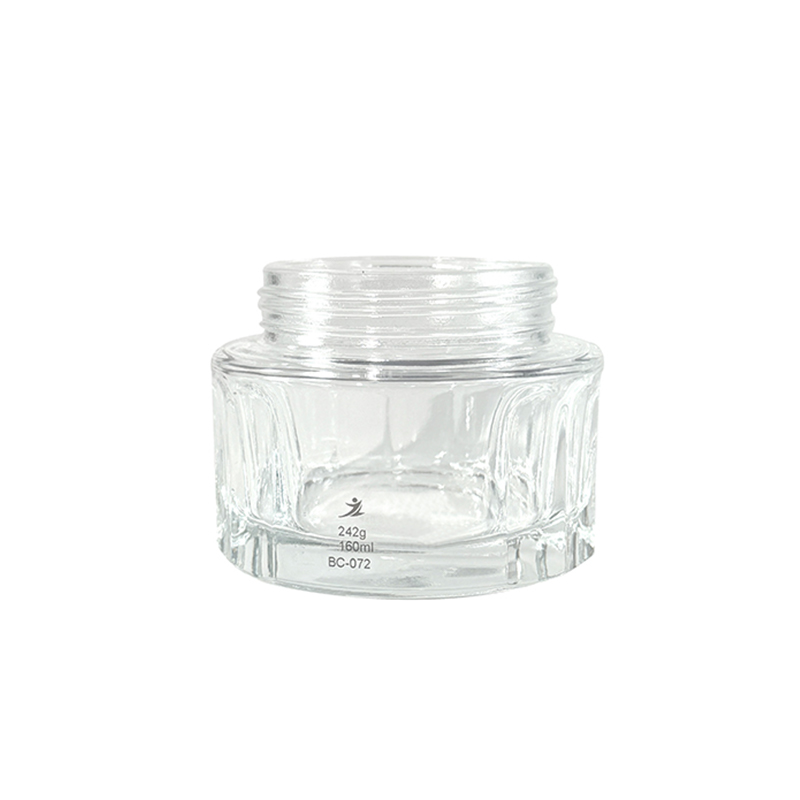 50ml Transparent Wide-Mouth Glass Jar for Creams and BalmsThis clear glass jar offers easy access and visibility for thick creams or balms. Its wide-mouth design suits spoon-dosed formulas, and the transparent body highlights product color and texture.View Product →
A 50 ml glass cream jar is the default first SKU for premium face creams for a measurable reason: twice-daily use empties 50 ml in six to eight weeks, which matches the repurchase cycle and keeps the formula's exposure window predictable.
Standard capacities and neck finishes in cream bottle packaging
Cream containers cluster around 15, 20, 30, 50, and 100 ml, and the neck finish, the thread geometry of the mouth, must be locked before any mold is cut.
The finish is not an afterthought. It determines which cap or pump can seal the container and is the first dimension checked in incoming quality control. Cosmetic glass typically holds plus or minus 0.5 mm on key diameters.
| Fill volume | Typical format | Common product | Finish family |
| 15 to 20 ml | Jar or screw bottle | Eye cream | Jar lid or 18 mm screw |
| 30 ml | Jar or pump bottle | Treatment cream | Jar lid or 18 mm pump |
| 50 ml | Jar or pump bottle | Face cream | Jar lid or 20 mm pump |
| 50 to 100 ml | Screw lotion bottle | Hand cream | Lotion pump |
| 100 to 250 ml | Wide jar or pump bottle | Body butter | Jar lid or 24 mm pump |
Ordering rule: source caps and glass from the same factory so thread tolerances and torque specifications stay on one scorecard.
For a treatment cream that must dispense by pump, a 30 ml screw cream bottle is one of the most requested stock items; it accepts standard cosmetic pumps and keeps the dose small enough for a four-week regimen.
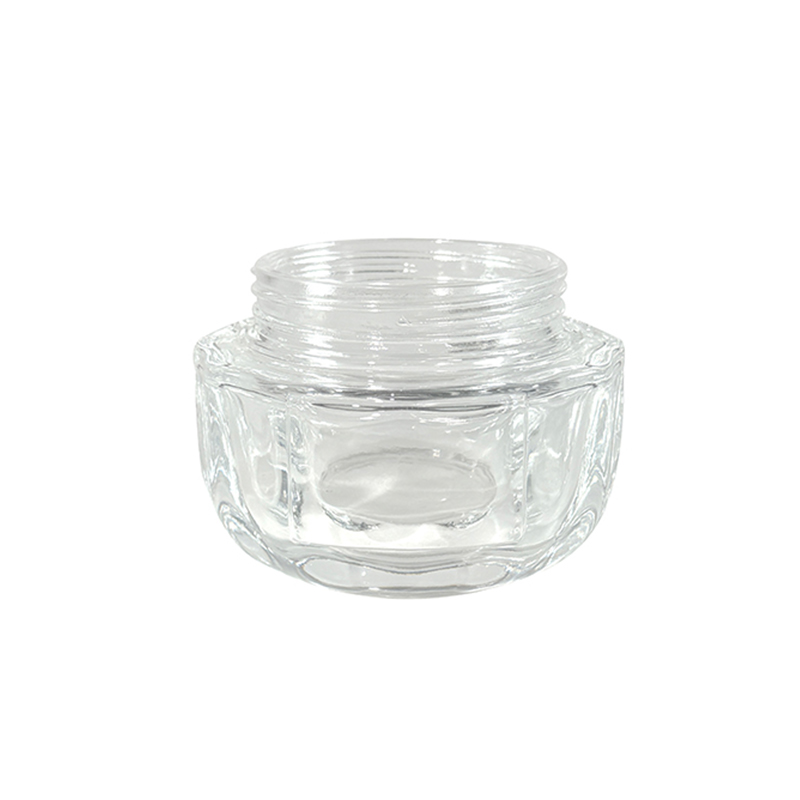 30ml Screw-Thread Glass Cream Bottle with Airtight SealA compact 30ml screw bottle ideal for treatment creams or travel-size samples. The threaded neck accepts standard pumps, while the inner plug provides an airtight seal for freshness.View Product →
Finishing and decoration: where the visual budget goes
Surface finishing and decoration create the largest visible cost difference in cream bottle packaging, so finishing samples must be approved before production begins.
Decoration starts at the glass surface. Fire-polished rims seal cleanly, hand polishing removes mold seams, frosted surfaces hide fingerprints, and spray coatings create saturated opaque colors and gradients. Brands can add silk-screen logos or hot-stamp metallics on top.
Glass container35%
Cap and pump25%
Decoration25%
Secondary packaging10%
Assembly and QC5%
Typical component shares for a decorated stock glass cream jar, excluding mold amortization.
On a decorated glass cream jar, the bare glass shell typically represents only a third of the total component cost; cap and decoration each absorb roughly a quarter. Negotiating only the glass price misses most of the bill.
Spray coating now dominates the color work, but it adds curing time; a two-color gradient with a silk-screen logo extends lead time by one to three weeks over plain frosted glass.
How to qualify a cream bottle packaging supplier
Qualify a supplier on glass compatibility, finish precision, decoration capability, and actual production scale before you compare piece prices.
5,000+mould shapes and sizes in the catalogue
230employees, 12% technical staff
60+ t/dayglass melting capacity
30+export markets served
Price per gram is a poor first filter. A factory with weak mold maintenance or sloppy cap matching can double your rejection rate, and the loss becomes visible only after filling.
- Request a finish drawing and cap-torque test result matched to your pump or lid.
- Fill-test your real cream in the sample bottle and check dosing, leakage, and pump pick-up.
- Measure tolerances on at least 20 sampled bottles; cosmetic glass commonly holds plus or minus 0.5 mm.
- Order decorated samples and run a thermal-shock test at your filling temperature.
- Confirm MOQ, lead time, and inspection levels in a written specification sheet.
Taixing Jili Glass Products Co., Ltd. employs 230 people, with 12% mid- or senior-level technical staff, and sustains 60-plus tons of daily glass-melting capacity for stock and OEM/ODM programs; review its manufacturing advantages before signing off.
If your line includes a 100 ml hand cream or body lotion SKU, a stock screw lotion bottle eliminates mold investment and ships far faster than a custom shape.
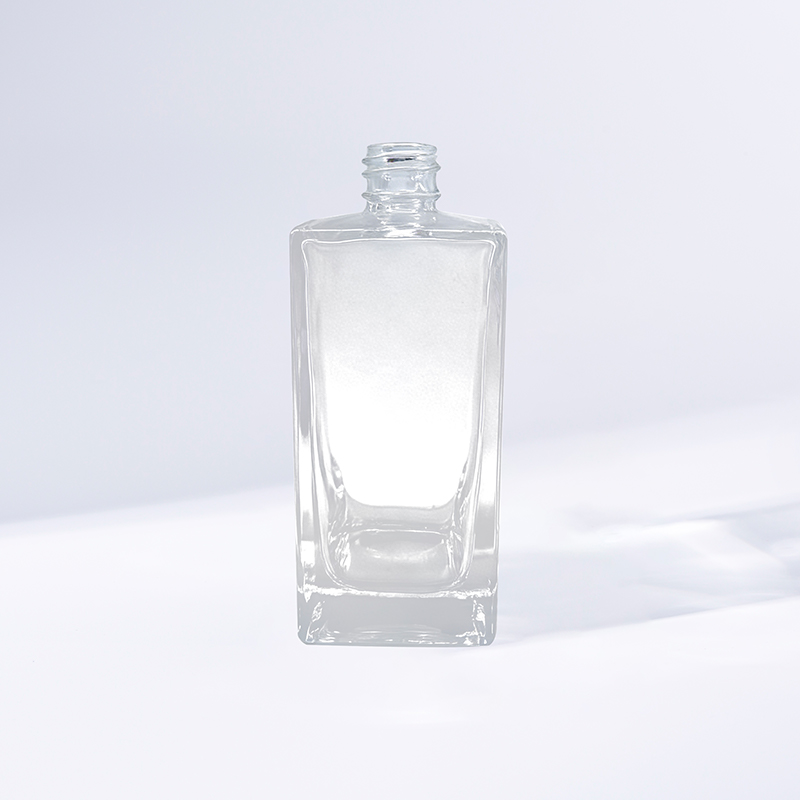 100ml Cylindrical Glass Lotion Bottle with Screw NeckA refillable 100ml glass bottle suitable for body lotions, hand creams, or liquid soaps. The transparent cylinder lets you monitor remaining product, and the screw neck fits standard pumps.View Product →
A supplier's rejection rate is public knowledge only after you audit it. Ask for the last 12 months of in-process defect data and cap-torque records for the specific finish you plan to use.
Frequently asked questions about cream packaging
What is the most common size for cream bottle packaging?
30 ml and 50 ml are the standard first SKUs for face creams, with 50 ml jars dominating the premium segment and 30 ml bottles used for treatment creams. Eye creams start at 15 to 20 ml, body butters at 100 to 250 ml.
Should a cream go in a jar or a pump bottle?
Use a jar when the formulation is thick or balmy and the brand wants a tactile shelf presence. Use a pump bottle when the cream is fluid enough to flow and when dose control or airless dispensing matters more than open access.
Can a standard cream jar accept a pump closure?
No. A pump requires a screw neck with matching thread and dip-tube length, while a wide-mouth jar has a different finish geometry. If you want pump dispensing, specify a pump bottle from the start.
How long does a custom cream bottle order take?
Stock bottles with standard decoration typically ship in two to four weeks. A custom mold, including a new shape, finish, and decoration, normally takes 60 to 90 days from tooling approval to first production samples.
Bottom line: the cheapest cream bottle is the one that passes filling, sealing, and stability on the first attempt.
Related products
-
-
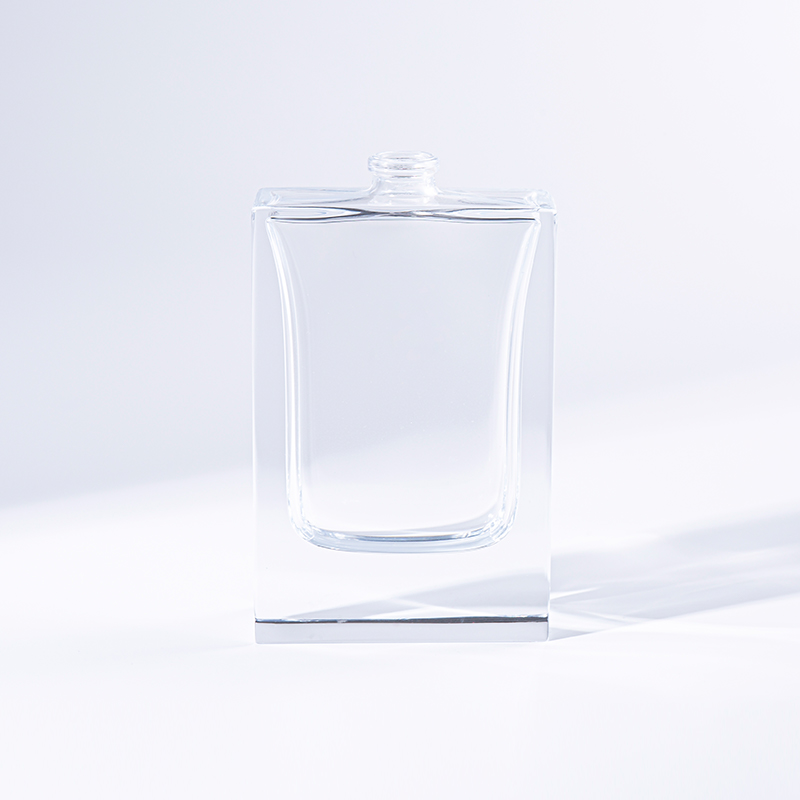
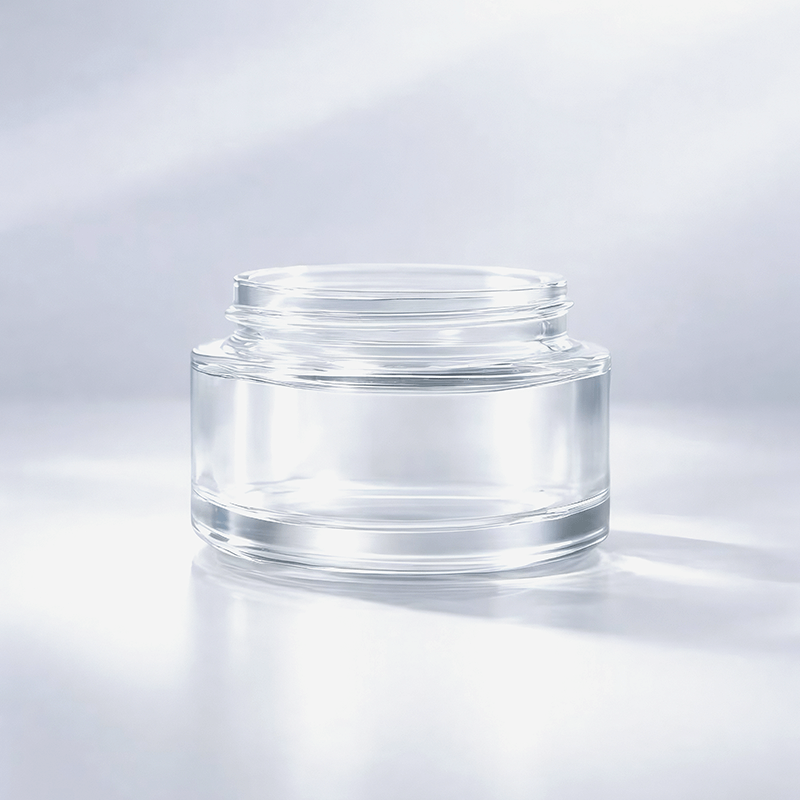
Z-442 Hand Polished Crimp Perfume Bottle 50ml. Hand-polished clear glass with a smooth finish. Aluminum crimp cap and precision spray nozzle. 50ml compact size. Ideal for travel, personal use, and gif...
See Details -
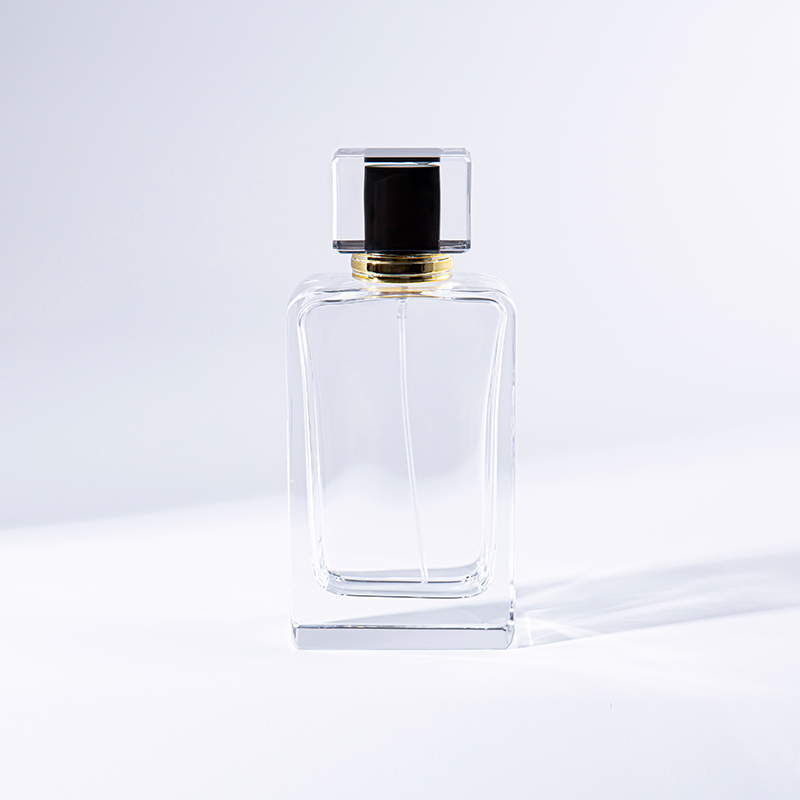
J2922 Hand Polished Crimp Perfume Bottle 100ml. Meticulously hand-polished to remove mold seams, resulting in deep gloss. Crimp neck for a secure seal. 100ml capacity. Ideal for mid-to-high-end perfum...
See Details -
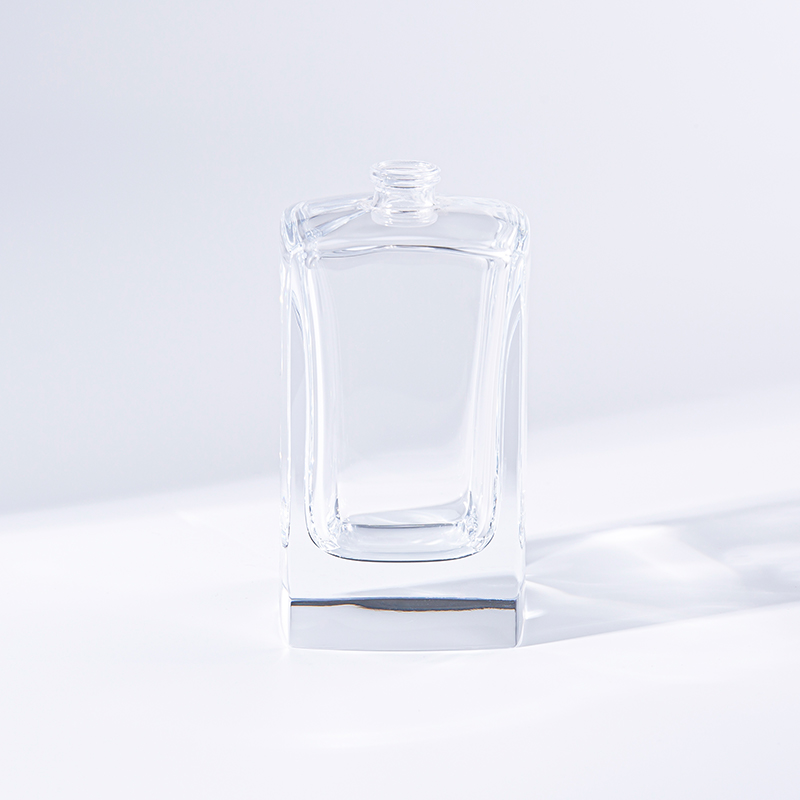
J3364 Hand Polished Crimp Perfume Bottle 100ml. Hand-polished clear glass for a smooth, glossy finish. Aluminum crimp cap with precision spray nozzle. 100ml capacity. Transparent for level monitoring....
See Details
Contact Info.
-
Tel.
+86 153 7158 1688 (Simon)
+86 181 3693 6668 (Mary)
+86 139 5117 2783 (Junwei Hua) -
Email
zl@jl-bl.cn (Simon)
mary@jl-bl.cn (Mary)
jwhua@jl-bl.cn (Junwei Hua) -
Address
Hongqiao Town, Taixing City, Taizhou City, Jiangsu Province, China
- Media
Leave Us for Quote
Copyright © Taixing Jili Glass Products Co., Ltd. All Rights Reserved. Custom Cosmetic Glass Packaging, Luxury Perfume Glass Bottle Manufacturer
