
 ENG
ENG  English
 русский
 Français
 Español
 عربى
عربى Türk
TürkZ-442 Hand Polished Crimp Perfume Bottle 50ml. Hand-polished clear glass with a smooth finish. Aluminum crimp cap and precision spray nozzle. 50ml compact size. Ideal for travel, personal use, and gif...
See DetailsSpray Perfume Bottle Guide: Closure Types, Sizes, and How to Choose the Right One
2026-09-04
Content
- 1 What Is Inside a Spray Perfume Bottle?
- 2 Crimp or Screw-Top Spray: Picking the Closure
- 3 Matching Capacity to Product Positioning
- 4 Finish Quality: The Details That Separate Premium from Ordinary
- 5 Quick Reference: Which Spray Bottle Fits Your Scenario?
- 6 Five Checks Before You Place an Order
- 7 Frequently Asked Questions
A customer forms an impression of a fragrance in the two seconds it takes to press an atomizer. A fine, even mist makes the juice inside feel expensive; a spluttering or dripping pump undoes months of formulation and design work. That is why the spray perfume bottle deserves more scrutiny than most packaging decisions receive. The short version: a reliable spray bottle comes down to three matched elements — a dimensionally accurate glass body, an atomizing pump that fits the neck finish exactly, and a surface finish that protects both the liquid and the shelf appeal. The sections below explain how those elements interact, which closure and capacity combinations suit which products, and what to verify before placing an order.
What Is Inside a Spray Perfume Bottle?
A spray perfume bottle looks simple, but it operates as a small mechanical system. The glass body stores the fragrance and carries the brand's visual identity. Above it sits the spray pump — usually hidden under a cap — which contains a spring-loaded piston, a sealing gasket, and a dip tube that reaches nearly to the base of the bottle. When the actuator is pressed, the piston pushes liquid up the dip tube and through a fine orifice, breaking it into the mist the user expects.
Three details decide whether this system works. First, the neck finish — the diameter and profile of the bottle mouth — must match the pump precisely; crimp necks are commonly specified in diameters such as 13 mm, 15 mm, and 18 mm. Second, the dip tube must be cut to the right length and angle so the bottle primes quickly and drains almost completely. Third, the mouth must be smooth and level, because a chip or rough patch there breaks the seal and eventually causes leaks.
Understanding these parts also explains most quality complaints: a leaking bottle is rarely about the cap alone, and more often about the fit between pump and mouth. For readers who want the full picture, we follow the entire perfume bottle production process in a separate article, from molten glass to packed cartons.
Crimp or Screw-Top Spray: Picking the Closure
The most consequential choice is how the pump attaches to the bottle. A crimp design locks the pump onto the glass neck by folding a metal collar under the lip, producing a permanent, tamper-evident seal. A screw-top spray builds the pump into a threaded cap that can be removed and reattached. Neither approach is universally better; they solve different problems.
| Aspect | Crimp (Crimped Pump) | Screw-Top Spray |
|---|---|---|
| Seal integrity | Permanent metal-to-glass seal; very low leak risk in transit | Relies on cap torque; dependable but re-openable |
| Refilling | Not designed for consumer refills | Well suited to refillable and travel formats |
| Filling line | Requires a crimping machine after filling | Works with standard capping equipment |
| Brand positioning | The norm in prestige fragrance retail | Common in niche, travel, and personal care lines |
| Typical sizes | Mostly 50-200 ml retail bottles | Mostly 20-60 ml travel and refill formats |
For most fragrance launches, crimping is the safer default: retailers and customers expect it on an eau de parfum, and the permanent seal stands up to long distribution chains. Screw-top sprayers earn their place when refillability is part of the brand story or when small batches make a crimping line impractical.
Matching Capacity to Product Positioning
Capacity is simultaneously a cost decision and a positioning statement. Our perfume bottle catalog is organized into three standard tiers — 20-50 ml, 50-100 ml, and 100-200 ml — and each tier maps naturally to a different job inside a fragrance range.
20-50 ml: Travel, Discovery, and Sampling
Small sprays keep unit cost and shipping weight low, which makes them ideal for travel retail, coffret gift sets, and sampling programs. A 35 ml spray such as the J2090 is one of the most versatile formats in this tier:
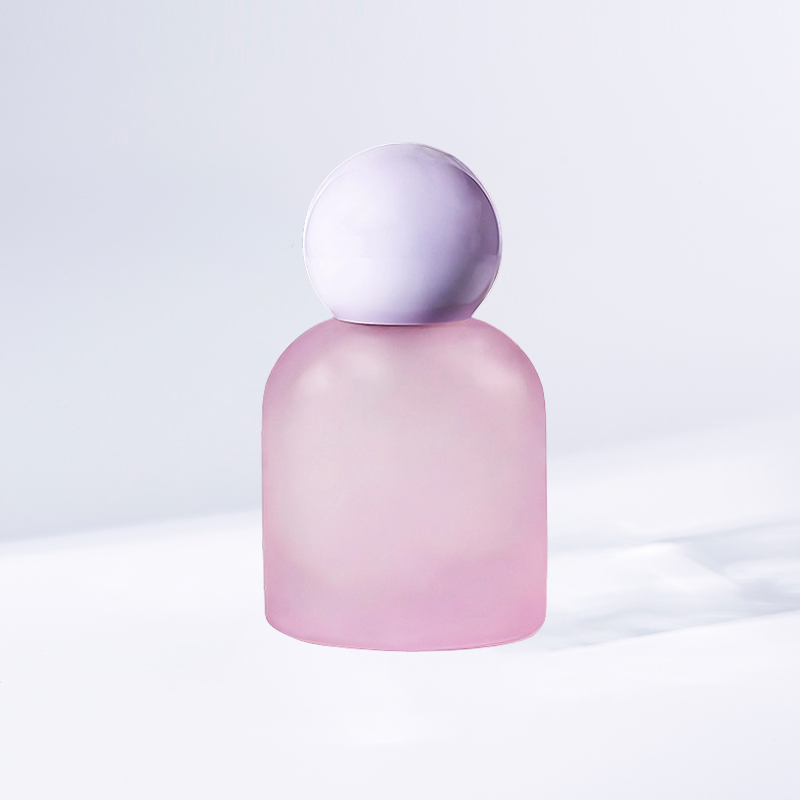 J2090 Spray Perfume Bottle 35mlThis 35ml glass spray bottle balances a 9mm-thick wall with an 85g weight, and its sandblasted matte finish removes the need for extra printing. It suits travel retail, gift coffrets, and sampling programs where compact format and low shipping weight matter most.View Product →
50-100 ml: The Retail Core
Most eau de parfum and eau de toilette launches settle between 50 and 60 ml — large enough to feel substantial on the shelf, small enough to keep fill cost controlled. The J1999, a 56 ml spray bottle, sits squarely in this core zone:
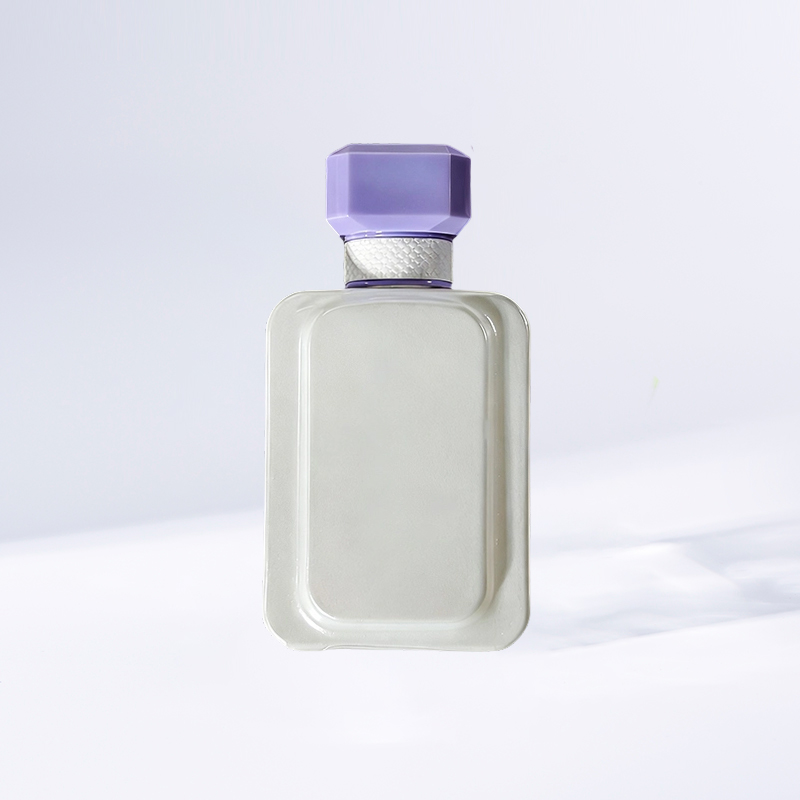 J1999 Spray Perfume Bottle 56mlA 56ml flat square spray bottle whose 55.7mm width gives generous frontal space for branding, with a 14mm wall and 125g weight built for durability. It fits squarely in the core 50-60ml zone favored by eau de parfum and eau de toilette launches.View Product →
100-200 ml: Statement and High-Use Formats
Larger bottles suit body mists, value-oriented duo sets, and scents customers apply generously. At 115 ml, the J2348 gives a fragrance line room for bigger fills and heavier compositions:
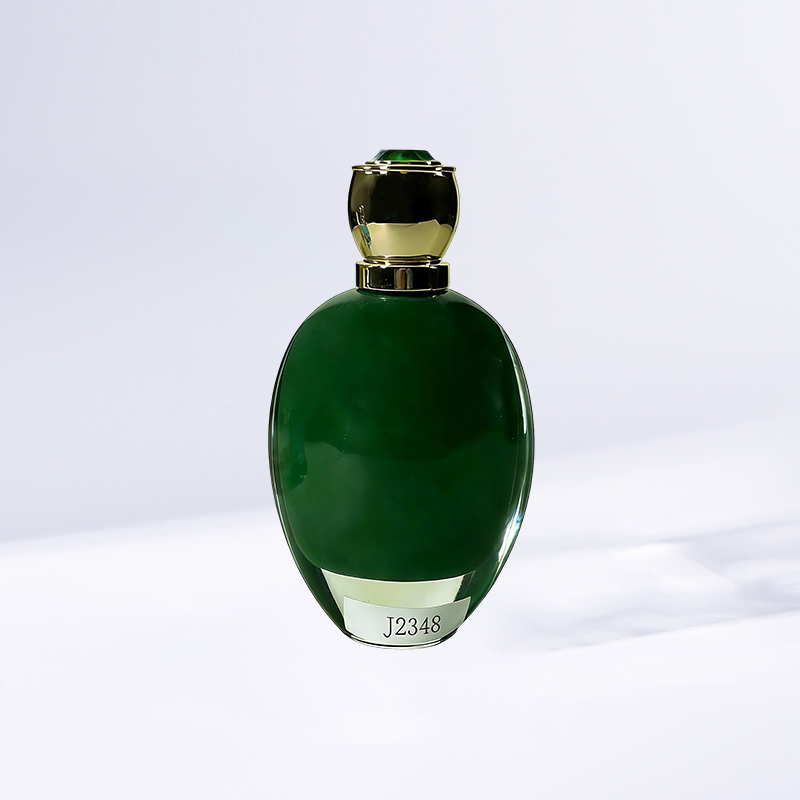 J2348 Spray Perfume Bottle 115mlThis 115ml spray bottle uses internal spray-paint to protect the color layer from contact with the fragrance, paired with a solid wood cap for natural warmth. Its larger capacity suits body mists, value duo sets, and generously applied scents.View Product →
Finish Quality: The Details That Separate Premium from Ordinary
Perfume bottles are typically formed from soda-lime glass, and two bottles made to the same drawing can still behave very differently depending on production discipline. Start with the mouth. A fire-polished mouth passes briefly through a flame that melts the surface layer and heals micro-cracks left by cutting; a hand-polished mouth is finished mechanically for an even flatter sealing surface. Both treatments exist for the same reason — an imperfect mouth is the most common root cause of leaking pumps.
Beyond the mouth, examine wall thickness consistency, since uneven walls deform under crimping pressure; check base stability, because a rocking bottle reads as cheap before anyone smells the juice; and inspect clarity and color uniformity. Decoration choices — frosting, color coating, screen printing, electroplated caps — should be settled early, because they influence how the neck and pump are specified.
Quick Reference: Which Spray Bottle Fits Your Scenario?
First EDP or EDT launch
A 50-60 ml crimp spray balances perceived value against fill cost.
Travel retail and gift sets
Choose 30-35 ml sprays to cut shipping weight and fit coffret boxes.
Body mist line
Step up to 100-150 ml bottles with a wide, comfortable actuator.
Refillable brand story
Screw-top sprayers let customers reuse the same glass body repeatedly.
Sampling campaigns
20-30 ml sprays keep cost per touchpoint low while staying gift-worthy.
Premium statement release
Fire-polished or hand-polished crimp bottles signal craft at first touch.
Five Checks Before You Place an Order
Most spray bottle failures are preventable, and catching them at the sample stage costs a fraction of fixing them after filling. Work through this list before committing to a production run:
- Confirm the neck finish against the pump supplier's drawing, and get the crimp height tolerance in writing.
- Leak-test filled samples under pressure changes, especially if the goods will travel by air freight.
- Actuate a full sample bottle 50 times or more, checking priming speed, mist fineness, and press force consistency.
- Store filled samples for several weeks to reveal slow leaks, discoloration, or juice staining.
- Agree on decoration specifications, minimum order quantities, and tooling responsibilities for any OEM/ODM customization before molds are cut.
Working directly with a glass manufacturer simplifies these steps, because bottle dimensions and pump specifications can be aligned on the same drawing. Our glass perfume bottle range shows how the standard models are specified, and each one can be adapted into a private-label design.
Frequently Asked Questions
Why does a spray perfume bottle leak under its cap?
Usually the pump and neck finish are mismatched, or the mouth surface is too rough for the gasket to seat properly. Correct crimp height and a polished mouth resolve most cases.
Can a spray perfume bottle be refilled?
Screw-top sprayers are designed for repeated refilling, while crimped pumps are meant to stay sealed for the life of the product. Brands built around refills typically start from a screw or removable pump system.
What capacity should a new fragrance brand launch with?
Most new launches anchor on a 50-60 ml retail size with a 30-35 ml travel format alongside. The two sizes can share pumps and decoration, which keeps inventory manageable.
What glass is used for spray perfume bottles?
Soda-lime glass is the industry standard: it is chemically stable, economical, and easy to form into the crisp facets and curves fragrance brands favor.
Choose the closure that matches your filling reality, pick a capacity tier that matches your positioning, and test the pump harder than your customers ever will. Once those fundamentals are settled, the bottle does what good packaging should do: it disappears into the experience of the fragrance itself. For brands planning a launch, aligning bottle drawings and pump specifications with the packaging supplier early is the single cheapest way to avoid surprises later.
Related products
-
-
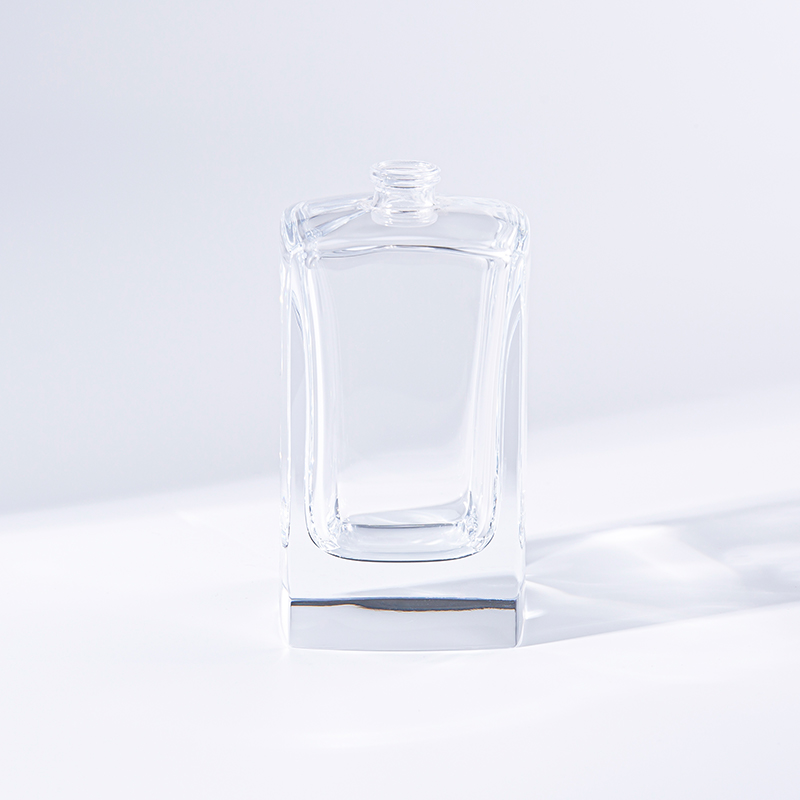
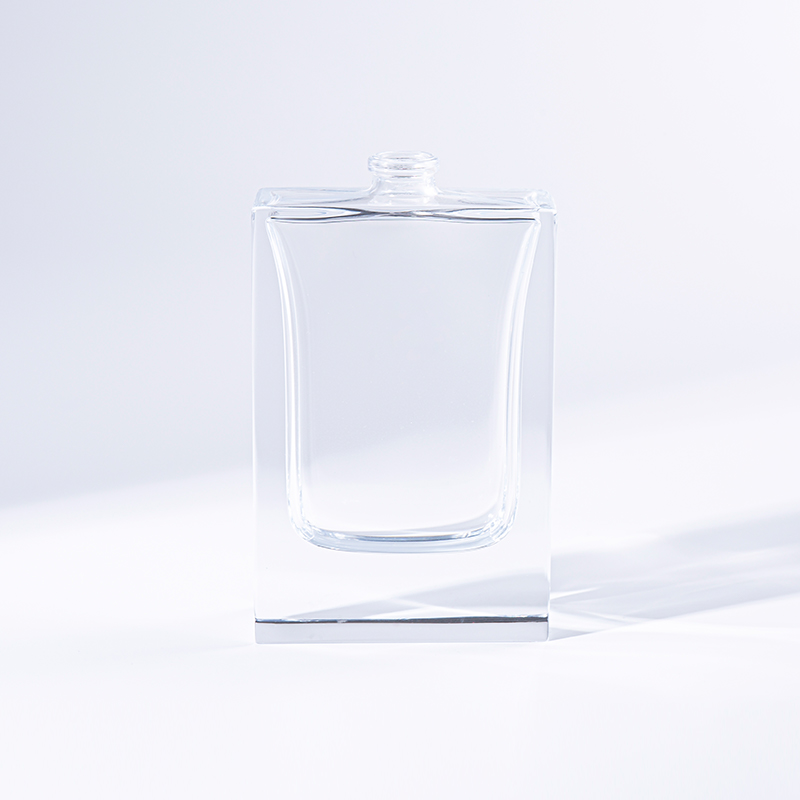
J3364 Hand Polished Crimp Perfume Bottle 100ml. Hand-polished clear glass for a smooth, glossy finish. Aluminum crimp cap with precision spray nozzle. 100ml capacity. Transparent for level monitoring....
See Details -
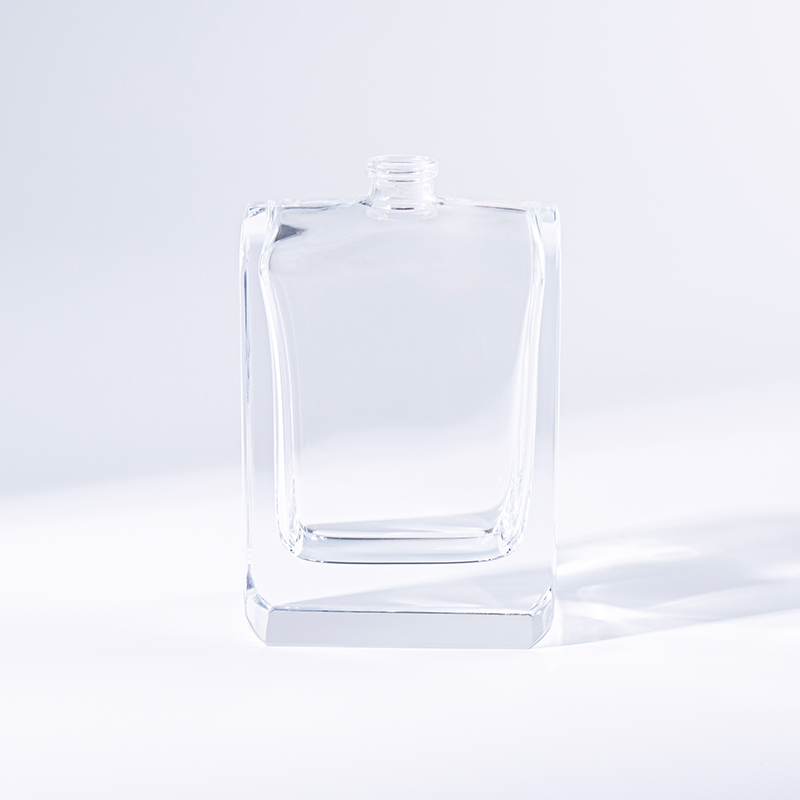
J2434 Hand Polished Crimp Perfume Bottle 100ml. Hand-polished neck and shoulder for enhanced touch. Crimp pump with aluminum collar. 100ml capacity. Smooth glossy finish at contact points. Suitable fo...
See Details -
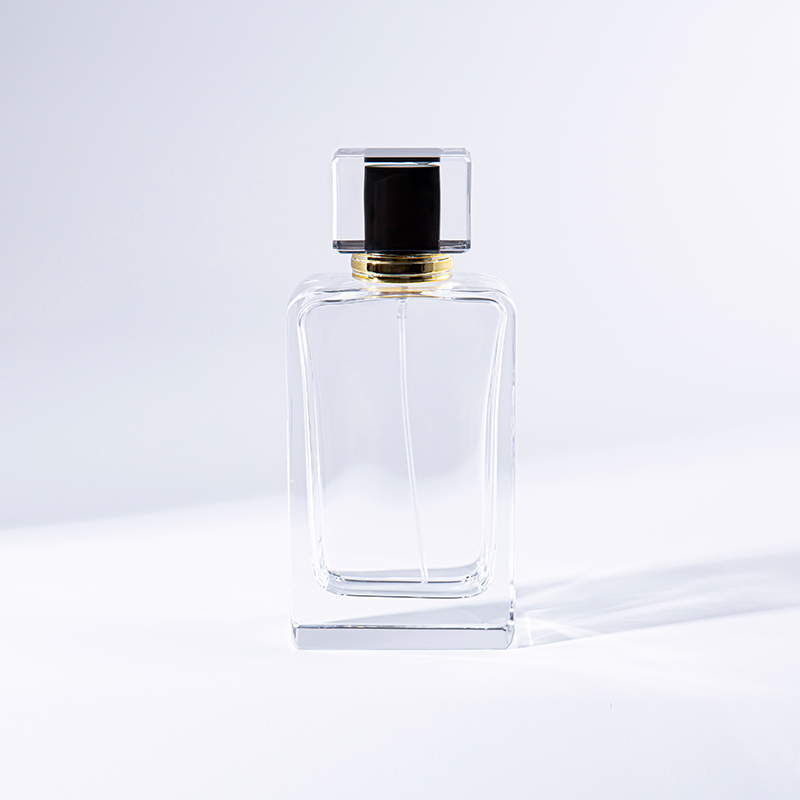
J2922 Hand Polished Crimp Perfume Bottle 100ml. Meticulously hand-polished to remove mold seams, resulting in deep gloss. Crimp neck for a secure seal. 100ml capacity. Ideal for mid-to-high-end perfum...
See Details
Recommended Links
Recommended News
Contact Info.
-
Tel.
+86 153 7158 1688 (Simon)
+86 181 3693 6668 (Mary)
+86 139 5117 2783 (Junwei Hua) -
Email
zl@jl-bl.cn (Simon)
mary@jl-bl.cn (Mary)
jwhua@jl-bl.cn (Junwei Hua) -
Address
Hongqiao Town, Taixing City, Taizhou City, Jiangsu Province, China
- Media
Leave Us for Quote
Copyright © Taixing Jili Glass Products Co., Ltd. All Rights Reserved. Custom Cosmetic Glass Packaging, Luxury Perfume Glass Bottle Manufacturer
